DQN Org
worked as - Founding Software Developer
back
DQN – Building a Web3‑Native Growth Engine
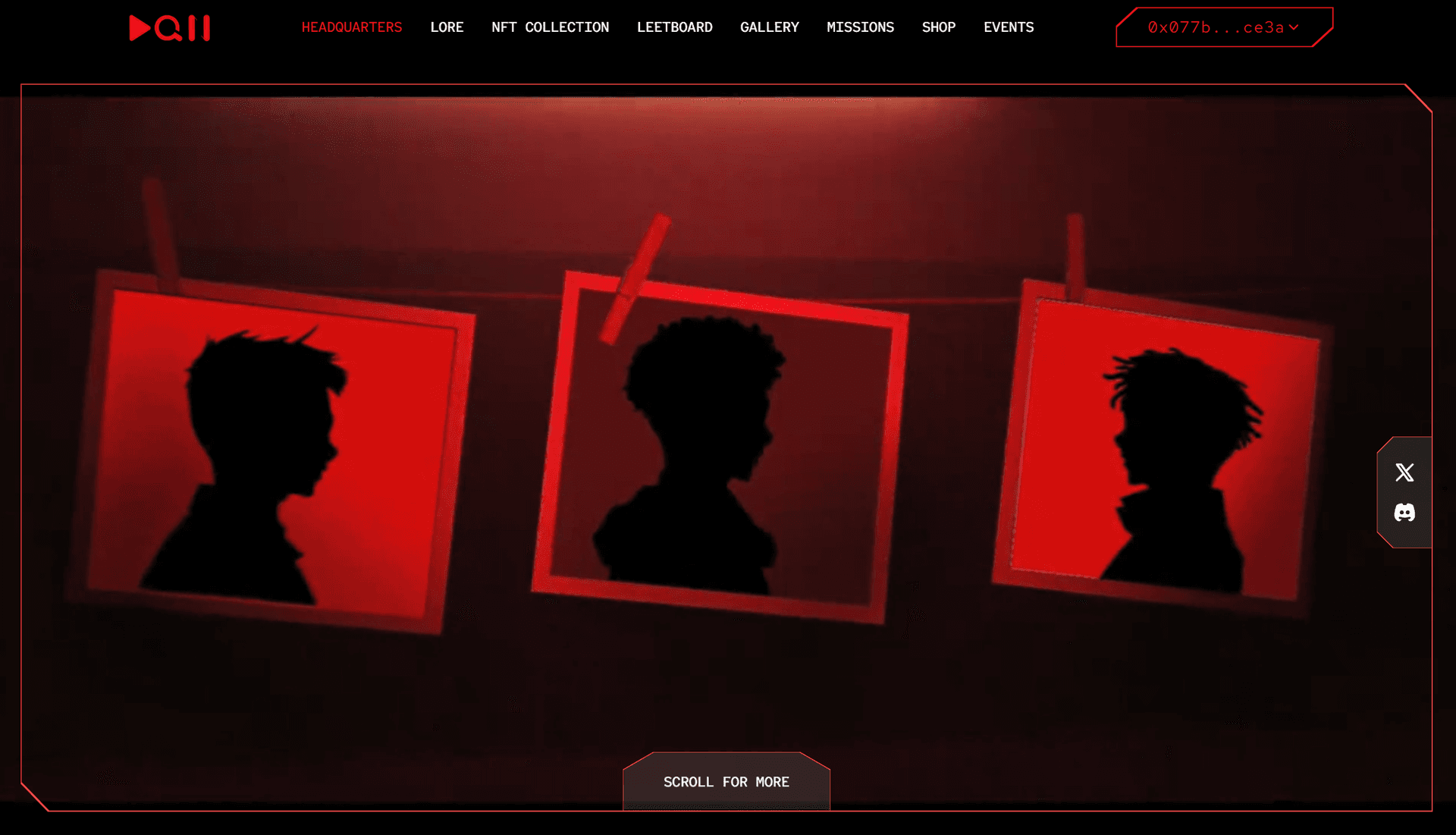
DQN Dashboard Overview
I've spent the last few years living at the intersection of product, engineering, and crypto. At some point I got tired of seeing "web3 projects" that were basically landing pages with a smart contract bolted on. So I did what most stubborn CTOs do: I built the platform I wished existed.
I call it DQN.
DQN is a web3‑native growth engine: a backend engine plus operational consoles that let you:
- Track real token and NFT activity on‑chain
- Turn that data into leaderboards, quests, raffles, and rewards
- Run the entire thing with production‑grade security, observability, and admin tooling
In this post, I want to walk you through what I built, why I built it, and how the pieces fit together – in plain English, as if we were sitting across the table with coffee.
What DQN Actually Is (In One Sentence)
DQN is a Node.js + TypeScript Web3 engine (`dqn-engine`) powering a pair of Next.js operational consoles (`dqn-console` and `404-console`) that together form a complete system to measure, motivate, and reward on‑chain communities.
If you prefer visuals:

DQN Architecture Overview
The Three Pillars: Engine + Consoles
1. `dqn-engine`: The Web3 Brain
`dqn-engine` is the backend brain of the system. It's a production‑ready Node.js/TypeScript/Express service that does the heavy lifting:
On‑chain data ingestion
- Syncs token transfers and NFT activity from the blockchain (via Alchemy, Moralis, etc.)
- Maintains collections such as `DqnHolder`, `NFT`, `Order`, `Raffle`, `Quest`, `Leaderboard`, and more.
- Tracks only holders with non‑zero balances and maintains incremental sync state to avoid rescan overhead.
Engagement & rewards logic
- Models quests, raffles, blood points (our engagement currency), and leaderboards.
- Exposes clean controllers for `auth`, `user`, `product`, `blockchain`, `dqn`, `volume`, etc.
- Schedules recurring jobs via `node-cron` (and a `CronManager`) to keep data fresh.
Operational reliability
- Split API and cron processes (`server.ts` and `cronServer.ts`) with watchdog scripts to make sure jobs don't silently die.
- Structured logging with Winston, plus separate combined/error logs for debugging.
- Dockerized, with CI/CD‑friendly config and multi‑stage builds.
Security & stability
- Helmet for secure HTTP headers.
- JWT authentication and rich middleware: `auth`, `admin-auth`, `user`, `validation`, `security`, `health`.
- Rate limiting, CORS configuration, and input validation via `express-validator`.
- Strong typing end‑to‑end thanks to TypeScript and typed Express/Mongoose models.
From an engineering perspective, the engine is basically a Web3‑aware, security‑hardened API that also runs scheduled jobs, syncs the chain, and drives all the "smart" parts of DQN.
2. `dqn-console`: The Operations & Growth Console
If `dqn-engine` is the brain, `dqn-console` is the control room.
This is a Next.js 15 app (App Router) with Tailwind, Radix UI, React Query, Redux, MongoDB, and an authentication layer. It's what an ops/growth/marketing team would actually live in day‑to‑day.
At a high level, `dqn-console` gives you:
Authentication & access control
- Modern auth stack (Clerk / NextAuth + JWT) with protected and public routes.
- A clear split between `(public)` (e.g. login/signup) and `(protected)` app space.
Operational views
- `dashboard`: top‑level health of the ecosystem.
- `users`: user list and insights, backed by `Admin` and `User` models in MongoDB.
- `events`: event/activity streams.
- `bounties` & `quests`: management UIs for on‑chain and off‑chain tasks with `QuestCreationForm` and associated flows.
- `nfts`: NFT gallery and controls.
- `shop`: manage items you can tie to blood points, quests, or holdings.
Modern frontend architecture
- Radix UI primitives + Tailwind + shadcn‑style components (`button`, `tabs`, `table`, `tooltip`, etc.).
- React Query for server state, Redux Toolkit slices for UI/application state (auth, chats, infinite scroll, search, online members, etc.).
- MongoDB + Mongoose models behind a typed `db.ts` layer.
- Clean separation of concerns: `actions/` for server actions, `hooks/queries` for data fetching, `components/common` for layout and shared widgets.
In practice, this console is where you create campaigns, manage users, configure rewards, and monitor how your community is behaving – all powered by the data and business logic from `dqn-engine`.

DQN Admin Console
3. `404-console` (`dqn-leetboard`): The On‑Chain Leetboard
Finally, there's `404-console`, internally titled `dqn-leetboard`.
This is a Next.js 15 + Tailwind application focused on the external‑facing side of reputation and status:
Token holder leaderboard
- Scripts like `getTopHolders.ts`, `parseUsers.js`, and CSVs of top holders (top 100/250) feed into the UI.
- Uses the same Web3 stack (Ethers, RainbowKit, Wagmi, Viem) to connect wallets and read on‑chain state.
- Visual components and assets (like `ai404.jpg`) to brand the leaderboard as a "404 / error‑themed" experience.
Community‑facing experience
- Display real‑time or near real‑time rankings.
- Let users connect wallets, see their standing, and understand how to climb the leaderboard.
- Use color extraction, motion, and sound (`color-thief-browser`, `framer-motion`, `use-sound`) to make it feel alive rather than "just another table."
If `dqn-console` is for operators, `404-console` is for players and community members. It's where your most engaged holders show off, compare, and get a tangible sense of progress.

DQN Leaderboard (404 Console)
How the Pieces Talk to Each Other
Here's the simplified picture:
- Blockchain layer — Token contracts, NFT contracts, transfers, and events live on‑chain.
- `dqn-engine` — Listens to and fetches blockchain events. Normalizes and stores them in MongoDB: holders, NFTs, orders, raffles, volume, blood transactions, etc. Runs cron jobs to keep everything in sync and rebuild leaderboards.
- Consoles — `dqn-console` (internal): authenticated admins/ops use it to create quests, manage rewards, curate products, and inspect users. `404-console` (external): community members use it to see rankings, connect wallets, and engage with what you've set up.
- APIs — Both consoles talk to `dqn-engine` via APIs (REST controllers and typed routes). Auth middleware ensures only the right calls are allowed (e.g., admin vs user vs public).

DQN Data Flow Architecture
A Few Things I Was Intentional About (CTO Brain Mode)
Security by default
I didn't want to ship yet another "works on localhost" prototype. So security was non‑negotiable:
- Helmet, CORS, and rate limiting baked into the middleware stack.
- Input validation via `express-validator` so the API doesn't accept garbage.
- JWT-based auth with separate user/admin flows.
- Least‑privilege APIs – everything admin‑sensitive is behind dedicated middleware.
- Logs are structured and split; you can actually investigate issues in production.
Operational resilience
It's not a real system until it survives the weekend.
- Cron vs API separation: cron and API servers run as distinct processes, each with their own watchdog.
- Typed models & tests: Jest is wired for unit/integration tests, plus helpers for auth and Express requests.
- Dockerized: you can build and run as containers, or orchestrate via `docker-compose` alongside other services.
Performance & DX
Performance and developer experience often fight each other; I tried to respect both:
- TypeScript everywhere (engine and consoles) to avoid runtime surprises.
- Modern frontend tooling (Next.js 15, Turbopack, React Query, Redux Toolkit).
- Smart incremental sync on the engine side: we track last processed blocks so we don't keep hammering RPC providers needlessly.
- Linting, formatting, and pre‑commit hooks (`eslint`, `prettier`, `lint-staged`, `husky`) so the codebase stays consistent.
Who Is DQN For?
If you're:
- Running a token or NFT project and want something deeper than a Discord bot;
- Building a community‑driven app where on‑chain behavior should map to quests, perks, and status;
- Or you're just a developer who wants a real reference architecture for a web3 backend plus consoles…
…then DQN is exactly the kind of stack I wish someone had handed me years ago.
Where I Want to Take It Next
A few directions that are on my radar:
- More pluggable reward engines – being able to drop in new "reward types" without redeploying the world.
- Multi‑chain support – making the engine truly chain‑agnostic with a clean provider abstraction.
- Deeper analytics – time‑series, funnels, and cohort analysis directly tied to on‑chain and off‑chain actions.
- Self‑serve onboarding – so non‑technical teams can deploy their own DQN instance with minimal friction.

DQN Roadmap & Future Vision
Closing Thoughts
I built DQN the way I think a CTO should build: secure by default, production‑first, with real operational workflows in mind – not just pretty screenshots.
If you're interested in:
- Adapting this stack to your own project,
- Stress‑testing the architecture,
- Or just nerding out over Web3 infra and growth mechanics,
feel free to reach out. I'm always happy to talk shop – especially with folks who care about both engineering quality and real user impact.